


When a search result leads you to an unfamiliar domain, a little curiosity is normal—and a little caution is useful. People searching for Afextop com are often trying to understand what the website is, what kind of material it publishes, and how much weight to give an article they found there. This guide offers a practical way to assess an unfamiliar multi-topic website without jumping to unfair conclusions or treating any single page as the final word.
The central idea is simple: a website can be convenient, interesting, and worth reading while still requiring readers to verify important claims elsewhere. That is true of Afextop com and of nearly every general-interest publication online. Use the steps below to decide what a page is useful for, how to check it, and when to look for a more authoritative source.
What Is Afextop com?
Afextop com appears to be a broad informational website rather than a single-purpose service, government portal, university resource, or specialist newsroom. Sites in this category may publish explainers, opinion-style pieces, lifestyle articles, practical guides, and topic pages across several subject areas. A broad editorial scope is not automatically a problem; it simply changes how a careful reader should use the information.
A useful starting question is not “Is every page on this site trustworthy?” It is “What is this particular page trying to do?” An introductory article may be perfectly suitable for learning vocabulary or generating questions to research. A page making a medical, legal, financial, or safety claim needs a much higher standard of evidence before you act on it. Separating those purposes prevents both blind trust and reflexive dismissal.
Why People Search for Afextop com
Most people do not search a domain name in a vacuum. They arrive after seeing a link in search results, social media, a message, or another article. They may want to know whether the site is an established publisher, whether a story is current, or whether a topic page is worth sharing. A domain-name search is a healthy research habit because it moves attention away from a catchy headline and toward the source behind it.
Searches for Afextop com can also reflect name confusion. Similar spellings, extra letters, and look-alike domains are common online. Before relying on an article, read the address slowly and confirm that the spelling in your browser matches the site you intended to visit. This takes seconds and can prevent you from researching the wrong publisher altogether.
Start With the Page, Not Assumptions
A clean design, a familiar writing style, or a prominent placement in search results does not prove that every statement is accurate. At the same time, a simple design or a broad mix of topics does not prove that a site is useless. Good evaluation starts with observable details on the specific page.
- Read the headline and opening carefully. Does the article promise a clear answer, a general overview, or a personal perspective?
- Check the publication date and, when available, the update date. Time-sensitive subjects age quickly.
- Look for a named author, author page, or editorial information.
- Notice whether important claims point to primary sources, official documents, reputable research, or merely other general websites.
- Distinguish facts from advice, predictions, and marketing language.
These checks do not require expert knowledge. They help you decide whether an article is a useful starting point or whether it needs stronger confirmation. If an important claim has no supporting source, treat it as unverified rather than filling in the missing certainty yourself.
How to Read a Multi-Topic Website
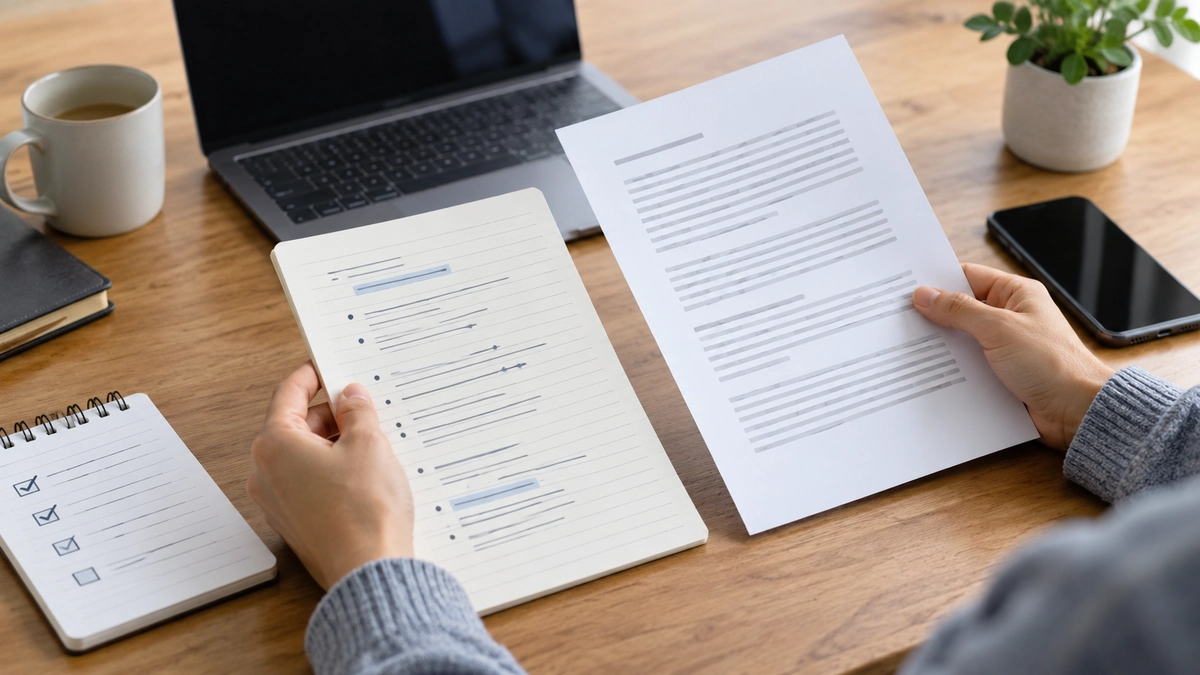
A multi-topic publication can cover travel one day, home ideas the next, and business or technology later in the week. That range can make it handy for casual discovery, but it also means expertise may not be uniform across every category. A writer who explains a simple lifestyle trend clearly may not be the best authority for a tax rule, a medical treatment, or a contract decision.
When reading Afextop com, identify the level of the piece. Beginner explainers can be valuable when they define terms, outline common questions, and direct readers to further research. They become less suitable when they present complex professional decisions as universally simple. A responsible reader matches the source to the stakes: the more a decision could affect health, money, legal rights, or personal security, the more important it is to confirm the information with a qualified or official source.
A Practical Credibility Checklist
Use this short checklist whenever an unfamiliar article catches your attention. It works for Afextop com, blogs, forums, newsletters, and many other online publications.
1. Check the author and publisher
Look for a byline and an author bio. A byline alone does not establish credentials, but it gives you a name to research and makes accountability easier. See whether the site explains its editorial process, contact information, corrections approach, or ownership. Transparent pages do not guarantee accuracy; they do make it easier to understand who stands behind the work.
2. Check the date and context
Publication dates matter especially for software, prices, laws, travel rules, product availability, public figures, and news. An older article may still explain a concept well while being wrong about current details. If the date is missing, be more cautious with any claim that can change. Context matters too: a title may sound broad while the article actually applies only to one country, time period, or set of assumptions.
3. Follow the evidence
Strong articles make it possible to trace significant claims. Look for links to official agencies, original studies, company announcements, court documents, or direct interviews where appropriate. Be wary of a chain of sites repeating one another without identifying an original source. Repetition can make a claim look established even when nobody has actually demonstrated it.
4. Compare independent sources
Open two or three sources that do not appear to copy each other. For a health matter, use a recognized health organization or clinician. For a legal question, use the relevant government or a qualified lawyer. For a product, start with the manufacturer, independent testing, and current retailer information. For a news event, compare reporting from organizations with clear editorial standards. Agreement from genuinely independent sources is more meaningful than many similar-looking pages.
5. Watch for overconfidence
Reliable writing can acknowledge limits. Be skeptical when an article claims a guaranteed result, uses dramatic language without evidence, or insists that a complicated decision has one easy answer. Clear uncertainty is not weakness. It is often a sign that a writer understands what the evidence can and cannot show.
Safety, Privacy, and Secure Browsing
It helps to separate technical safety from editorial reliability. A secure connection, usually shown by HTTPS in the browser, means information sent between your browser and the website is encrypted in transit. That is important, but it does not certify every claim on a page or every external link it contains. Conversely, a page can contain sensible information while still being poor at explaining its sources.
For everyday browsing, keep your browser updated, avoid downloading unfamiliar files, and do not reuse passwords. If a page asks for personal information, payment details, remote access, or account credentials, pause before continuing. Check the exact domain, find independent contact details, and use official support channels rather than a link in an unexpected message. These are general habits, not accusations about any particular website.

When Afextop com Can Be Useful
A general-interest article can be useful for orientation. It may introduce a subject, suggest useful terms to search, summarize common questions, or help a reader decide whether a topic deserves deeper research. If an Afextop com page is clearly written, current enough for the subject, and modest about what it can prove, it can serve as part of that early learning stage.
Use the page to build a research path rather than to end one. Write down the exact claim you need to verify, locate the original source where possible, and compare the explanation with an independent authority. This approach preserves the convenience of general web content while keeping major decisions grounded in stronger evidence.
When You Should Look Elsewhere First
Some topics deserve specialist sources from the outset. For diagnosis, treatment, medication, or mental-health emergencies, consult licensed healthcare professionals and established health organizations. For legal obligations, immigration, tax, contracts, or benefits, use official government material and qualified advisers. For investing, borrowing, insurance, or major purchases, review current disclosures and seek appropriately licensed guidance. For urgent safety concerns, use emergency services and official local instructions.
This does not mean general articles have no value. It means their role changes. They can help you frame questions for an expert, understand a basic term, or locate the relevant agency. They should not replace the professional or primary source when the consequences of being wrong are significant.
How to Spot Common Warning Signs
Warning signs are cues to slow down, not automatic proof of bad intent. A page may deserve extra scrutiny when it hides the date, offers no author or source information, uses copied-looking images, makes extraordinary promises, or pressures you to act immediately. Pop-ups that demand a download, a payment, or sensitive information should also trigger caution.
Another warning sign is a mismatch between the article and its evidence. For example, a confident health claim supported only by a vague blog link is not strong evidence. A financial recommendation based on an undated chart is not enough for a real decision. Ask what would change your mind, then look for a source capable of answering that question directly.
A Five-Minute Research Routine
- Read the exact address. Confirm the spelling and avoid confusing a similar domain with Afextop com.
- Check date, author, and purpose. Decide whether the page is an overview, opinion, news report, or commercial page.
- Open the cited sources. Prefer original documents and first-party sources for important facts.
- Find one independent confirmation. Use a source with relevant expertise and no obvious copying relationship.
- Match your next step to the stakes. Casual curiosity may need only a quick check; a consequential choice may need an expert.

Frequently Asked Questions About Afextop com
What is Afextop com?
Afextop com is a domain associated with a broad informational website. Individual pages may cover different subjects, so it is best to evaluate the specific article and its sources rather than assuming every topic has the same level of expertise.
Is Afextop com safe to visit?
Use normal browsing precautions with any unfamiliar website: confirm the address, keep your browser updated, avoid unexpected downloads, and do not share sensitive information unless you have independently verified the service. A secure connection is helpful but does not by itself verify content accuracy.
Can I trust information from Afextop com?
It may be useful as a starting point for general reading. For claims involving health, money, law, security, or rapidly changing facts, verify the claim with primary sources, official agencies, or qualified professionals before acting.
Why should I check the date on an Afextop com article?
Dates help you judge relevance. Rules, prices, software features, travel requirements, and public information can change, so an otherwise helpful article may no longer describe the current situation.
How do I verify an unfamiliar website quickly?
Check the exact domain, author, date, sources, and editorial information. Then compare any important claim with at least one independent and more authoritative source. This routine works for Afextop com and for most other unfamiliar publishers.
Final Thoughts
The best way to approach Afextop com is with balanced curiosity. Explore articles that help you understand a topic, but keep track of what is supported, what is dated, and what needs confirmation. A useful website can open the door to learning; responsible research means walking through that door with questions, not assumptions.
In practice, the goal is not to label every site “good” or “bad.” The goal is to make proportionate decisions. For light reading, a clear overview may be enough. For important choices, move closer to the original evidence and the people qualified to interpret it. That habit will serve you well wherever your next search leads.
